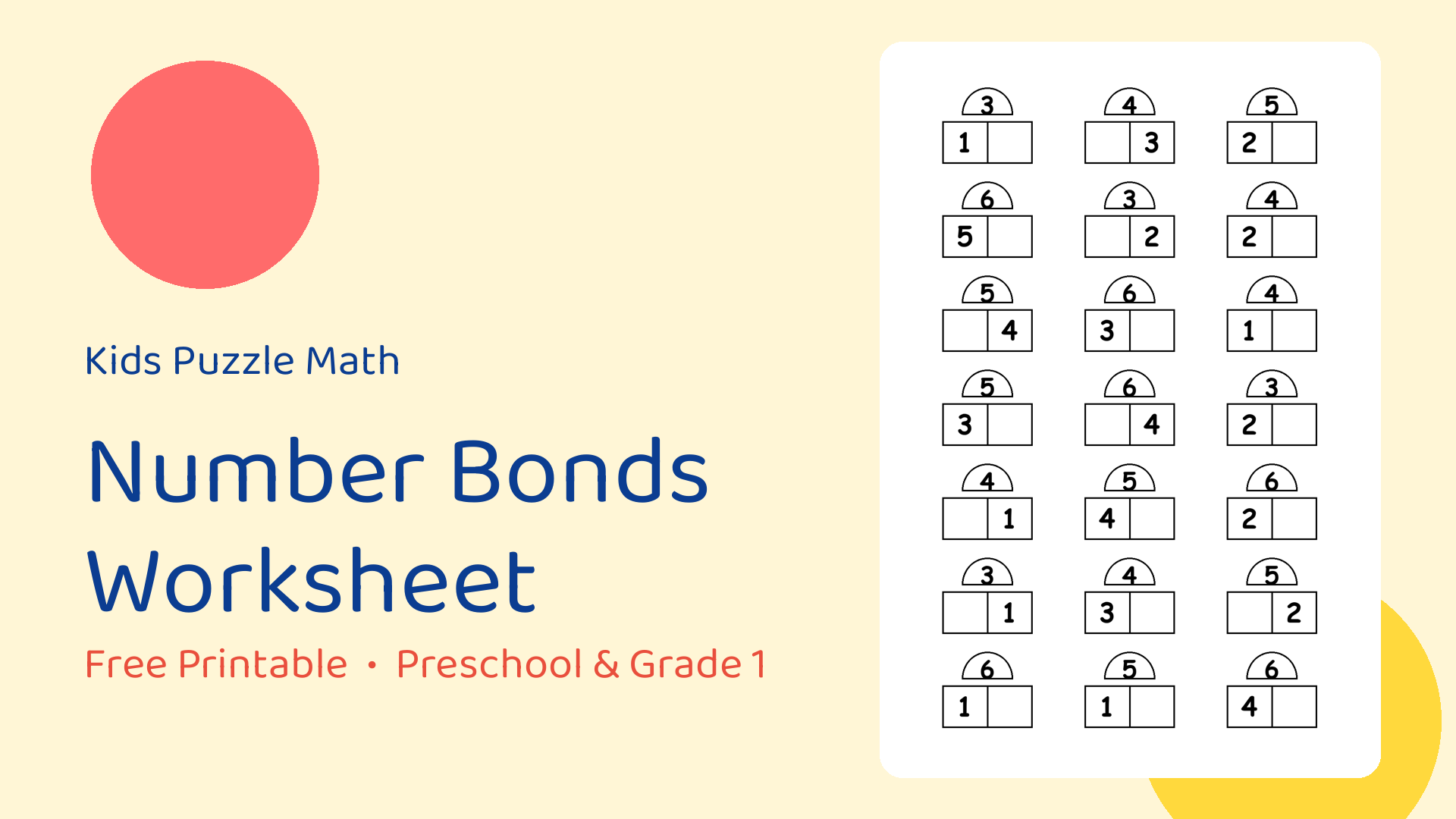
Here is a number bonds worksheet that feels more like a puzzle than a page of sums. It is a free printable missing number activity for preschool and Grade 1 children, and it is made for those first, wobbly steps with addition to 10.
Each page is full of little number houses. The whole number sits in the roof, and two parts sit underneath. One part is printed, and the other part is blank. Your child has to find the number that makes the house complete.
What is this number bonds worksheet?
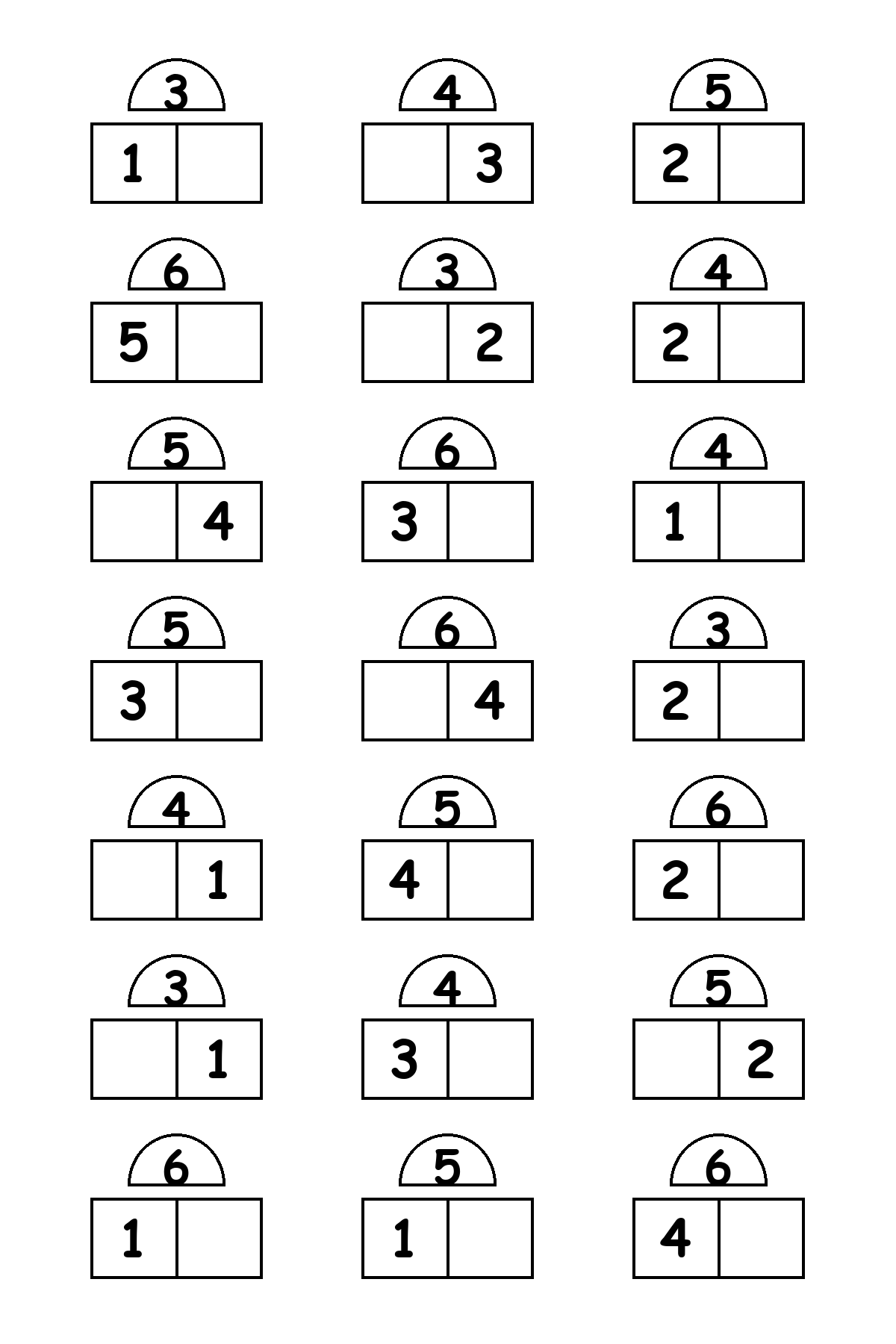
This sheet uses number houses for the numbers 3 to 6. Each house has a whole number on top and two parts underneath.
One part is shown. The other part is missing. Your child finds the missing number that makes the bond complete.
It is simple, but it does a lot of good. When children see how numbers split and join again, addition starts to feel much easier later on.
- Number houses for the numbers 3 to 6
- Missing number practice
- Addition to 10
- Perfect for a quiet maths moment
How to use the houses
Start with one house together. Point to the whole number in the roof, then look at the part you can see.
Ask, “What goes with this number to make the whole?” Then let your child count on from the part they can see, or count back from the whole.
- Work out the missing number and write it in the empty space.
- Check each house by adding the two parts together. Do they make the whole number?
- Talk about the bonds as you go. For example, 3 and 2 make 5.
- Saying the bond out loud helps it stick.
Try it as a quick warm-up, a maths centre activity, homework or extra practice at home. Five or ten minutes is plenty.
The six sheets in this post
You will find six sheets below. Start with the first one, then move through the others in order.
Each one is a fresh set of houses, so your child cannot simply remember yesterday’s answers. The first sheet keeps the numbers small. The other five stretch the same idea up to 10.
Print one sheet at a time. That way, a short practice session still feels like a win.
Sheet 1 — Start small: bonds to 6
This is the main sheet, and it is the gentlest place to begin. It has 21 number houses, and every whole number is between 3 and 6.
Your child looks at the roof, looks at the part that is given, and works out the part that is missing. For example, if the roof says 5 and one part says 3, the missing part is 2.
Tip for parents and teachers: let your child use fingers or counters for the first few houses. Once the idea clicks, put the counters away and let them count on in their head.
Download Worksheet (Free Printable)
Sheet 2 — Variant 1: bonds to 10, first full set
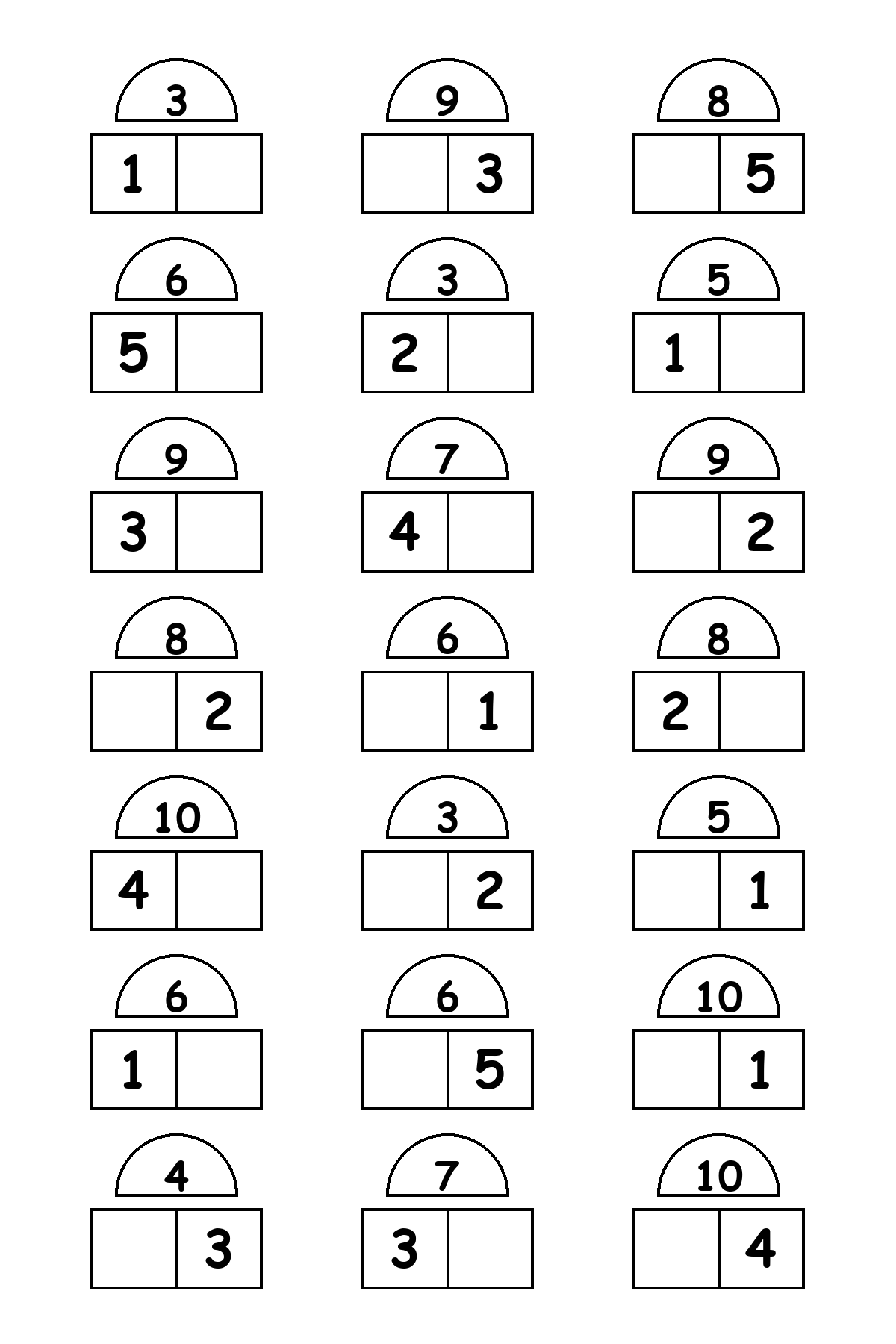
This sheet keeps the same house layout, but the whole numbers now run from 3 to 10. There are 21 houses to finish.
The missing part can sit on the left or on the right, so your child has to read each house properly. The very first house has 3 in the roof and 1 underneath, so the missing part is 2.
Tip for parents and teachers: ask your child to cover the whole number, guess the answer, then uncover it and check. That little pause makes them think instead of rushing.
Download Variant 1 (Free Printable)
Sheet 3 — Variant 2: bonds to 10, mixed missing parts
This is a second fresh set of 21 houses for the numbers 3 to 10. None of the answers are the same as the sheet before it.
Your child still finds one missing part in each house. The first house has 9 in the roof and 4 underneath, so the missing part is 5.
Tip for parents and teachers: get your child to say each finished bond out loud, such as “4 and 5 make 9”. Hearing the pairs helps them remember bonds to 10.
Download Variant 2 (Free Printable)
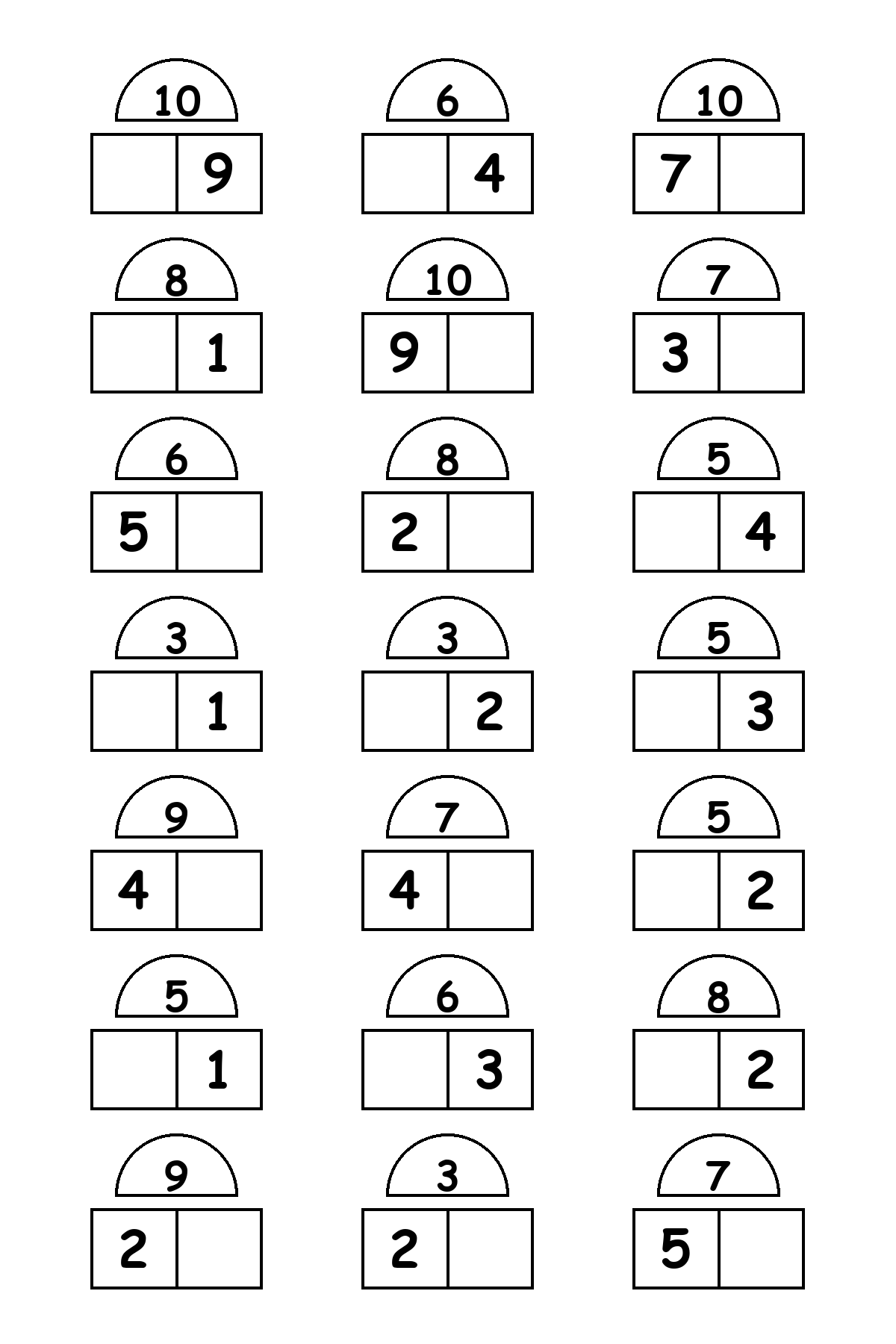
Sheet 4 — Variant 3: bonds to 10, with lots of tens
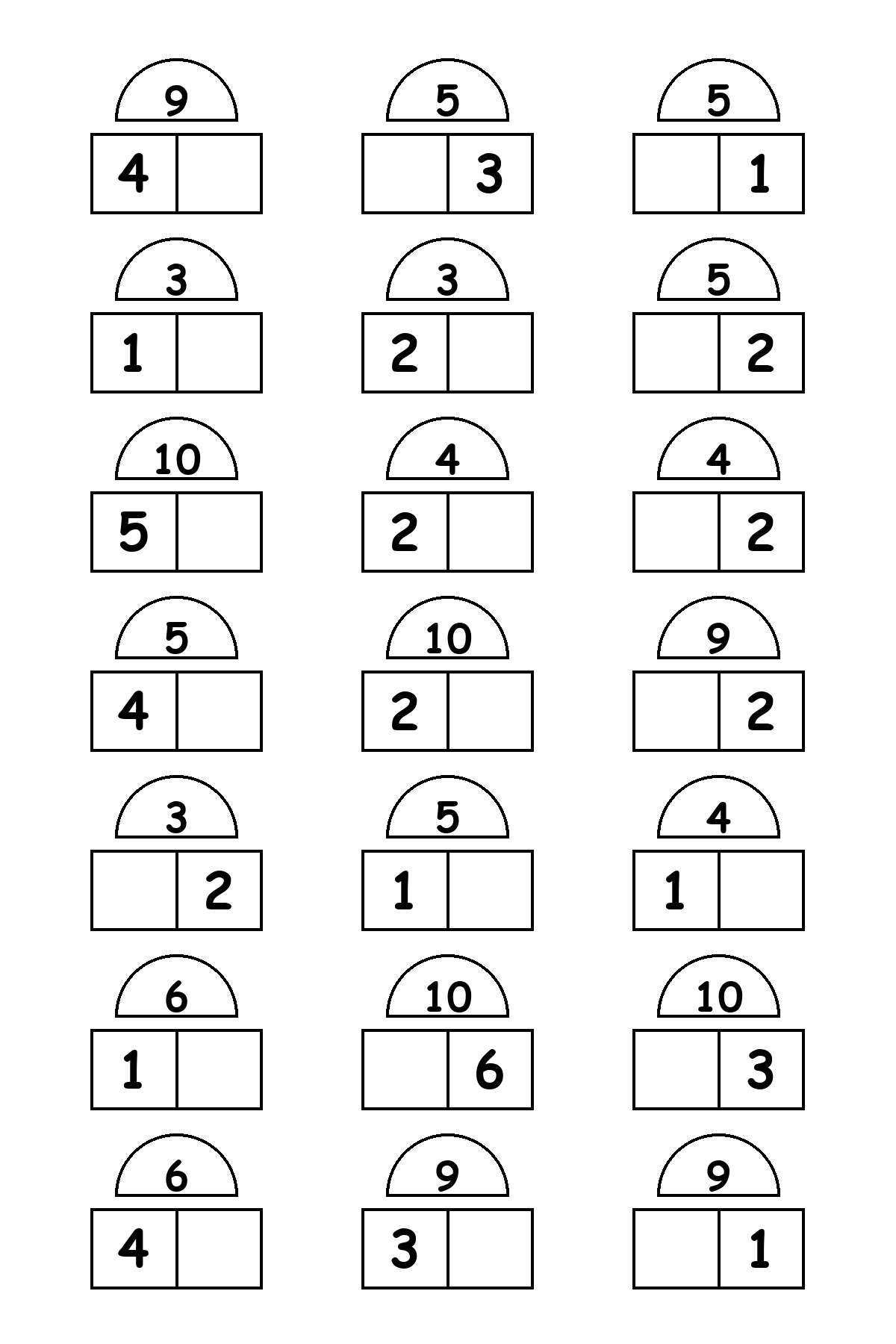
This sheet leans on bonds to 10, which are the ones children use most in Grade 1. It has 21 houses, with whole numbers from 3 to 10.
The first house has 10 in the roof and 9 underneath, so the missing part is 1. That is a good one to talk about, because 9 and 1 is a pair worth knowing by heart.
Tip for parents and teachers: before your child starts, ask them to spot all the houses with 10 in the roof. Doing those first builds confidence for the rest of the page.
Download Variant 3 (Free Printable)
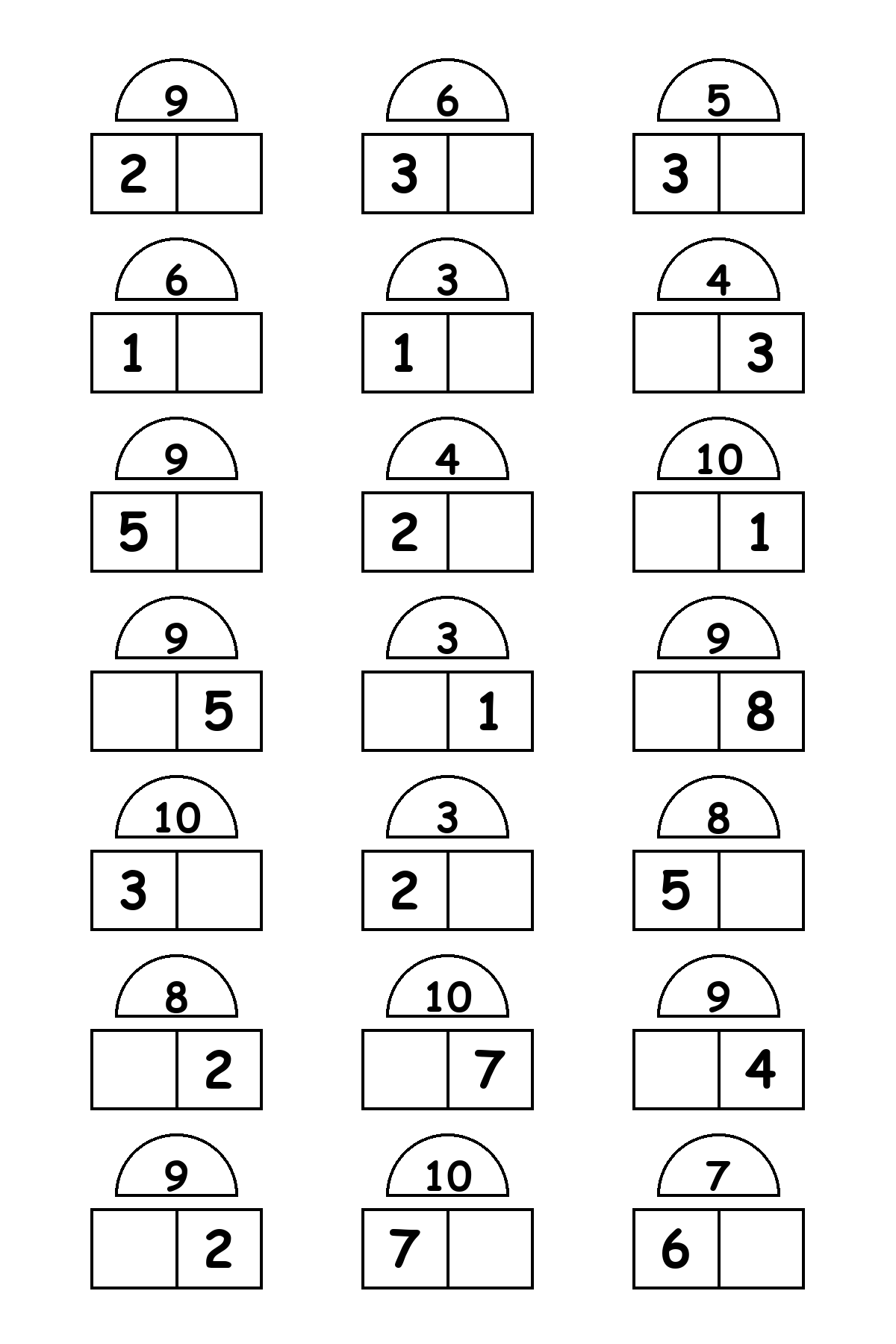
Sheet 5 — Variant 4: bonds to 10, a steady challenge
This is the fourth sheet in the set, with another 21 houses for the numbers 3 to 10. The missing part moves from side to side, so there is no shortcut.
The first house has 9 in the roof and 2 underneath, so the missing part is 7. If your child finds that one tricky, count on from 2 together: 3, 4, 5, 6, 7, 8, 9.
Tip for parents and teachers: do this sheet on a different day from the last one. A fresh day makes it a real test of what they remember, not just what they did ten minutes ago.
Download Variant 4 (Free Printable)
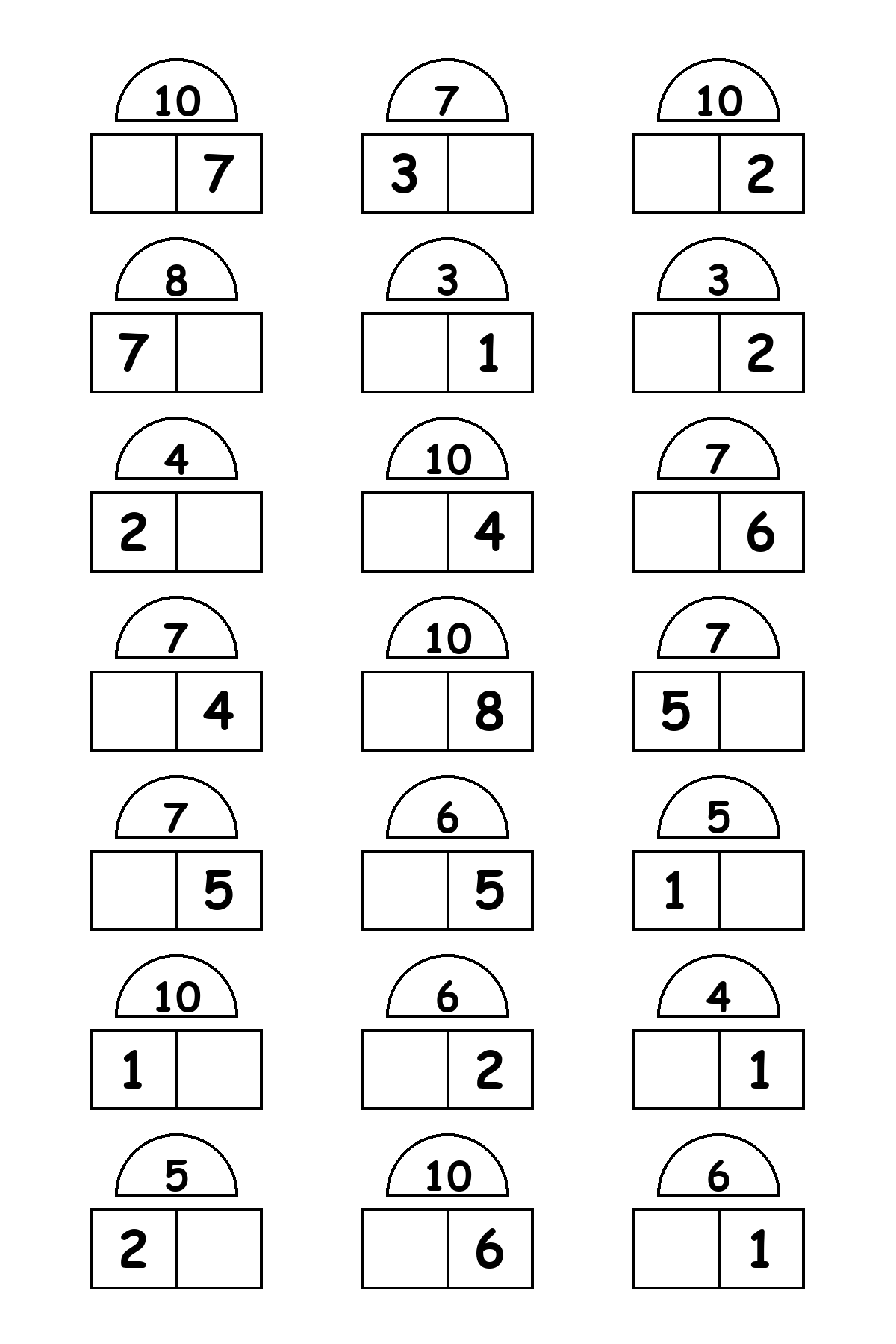
Sheet 6 — Variant 5: bonds to 10, the final set
This last sheet is another 21 houses for the numbers 3 to 10, and it is a good one to finish the set with.
Your child works through each house in the same way. The first house has 10 in the roof and 7 underneath, so the missing part is 3.
Tip for parents and teachers: let your child try this sheet without help first, then go back over any houses they missed together. Praise the ones they got right before you fix the wobbly ones.
Download Variant 5 (Free Printable)
Who is it for?
These sheets are for preschool and Grade 1 children. They suit teachers, homeschool families and parents who want a short, calm bit of maths practice.
Use them in class, at home, or on the go. If a sheet feels too hard, go back one and build up again. There is no rush.
How to print and download
Printing is easy. Click any image above to open it at full size, then print it, or press Ctrl+P (Cmd+P on a Mac).
You can also download this number bonds worksheet and save it to print again later. Print it, grab a pencil, and you are ready to go.
All six sheets are free to print for home and classroom use. Enjoy the quiet maths moment — and the little smile when a house is finished.